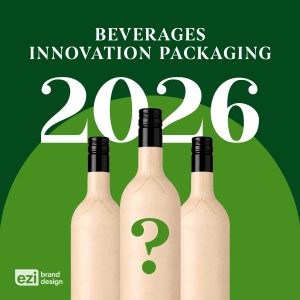
We take a look at beverage packaging trends for 2026: paper bottles, premium textures, high-performance labels, lightweighting, and sustainability, along with a practical decision-making checklist.
Beverage packaging is undergoing major transformation: environmental constraints, transportation costs, consumer expectations, and the need to stand out on shelf. In 2026, materials and finishes become a brand language in their own right.
“Paperization”: Paper Moves Upmarket (Beyond Just the Label)
There is real momentum around paper-based bottles to reduce weight and carbon footprint, particularly in wine and certain premium spirits or limited-edition products. Paper becomes a surface for expression: 360° printing, textures, finishes, and storytelling.
The Return of Tactile: Textures, Embossing, and Micro-Details
Premium brands are investing in tactility: textured paper, embossing, debossing, spot varnish, subtle foil, specialty inks.
Why? Because tactile elements increase perceived value and slow down the purchase decision, people pick up the bottle.
“High-Performance” Labels
With the rise of cans and moisture-heavy environments (ice buckets, coolers, refrigeration), labels must perform: proper adhesives, durability, color stability, and legibility.
The label becomes as much a differentiation tool as a compliance requirement.
Lightweighting and Transport: Design Meets Engineering
Material reduction and logistics optimization are influencing packaging choices: lighter bottles, stackable formats, optimized cartons, more efficient multipacks.
Good design means less breakage, lower transport costs, and improved margins.
Transparency and Sustainability: Beware of Greenwashing
Consumers quickly spot vague claims. Sustainability statements must be clear, precise, and aligned with the whole system (materials, local recyclability, inks).
The best approach? Tell a simple, verifiable truth.
Checklist: How to Choose the Right Material and Finish
- What is the price positioning?
- Where will the purchase happen (liquor board, e-commerce, restaurant)?
- Will the packaging be frequently handled or chilled?
- Does it need to perform at thumbnail size?
- What is the sustainability objective (weight reduction, recyclability, recycled content)?
- What story should the material tell (craft, luxury, natural)?
Looking to elevate your premium perception, or make your packaging more sustainable without losing impact?
We can run a focused sprint: benchmark + material recommendations + creative direction + mockups.
Book a meeting and let’s build a realistic, production-ready approach for your brand.
Let’s create your next brand, together.